There Is No Spoon
Everyone's worried AI will hurt junior workers. But there's hope. They haven't been institutionalized into how things 'should' work. Like that elephant bound by a string, we're limited by what we believe we can do, not what we're capable of.
I think the kids are going to be alright. There's a lot of understandable fear and concern about the future of work in the face of AI particularly in regard to junior people entering the workforce. I'm not in the prediction game. I didn't see today coming even as late as this morning. So much is changing so quickly. But still, I am hopeful.
When I say "kids" I don't mean it derisively. I just mean all the people who haven't yet been habituated to how we work and the lanes and roles we come to occupy. With so much changing, I don't think that's completely a disadvantage. I'm starting to worry more for those of us who are institutionalized and may never realize our full potential in the face of this technology. The kids on the other hand don't even know where the boundaries were.
I was doing an AI coaching session recently. A friend has done some prototypes with Lovable but felt as if he couldn't carry it the last mile to fully have it be useful. I'm helping him ship. I realized midway through this session that a lot of what I'm doing isn't telling him how to do something but is instead just giving him the comfort that what he wants to do is possible. I'm trying to teach him to fish so tomorrow he doesn't balk at something new thinking he needs the magic incantation to make something happen.
"This is less me showing you the way and more me showing you there is no 'way.'"
Instead of giving him my answers, I'd ask him to ask the AI how to proceed. There are certainly better and worse ways of going about things, but what technique is better today may not be better tomorrow with whatever the next new model brings. I guess we are learning how to learn with these tools.
One of the things the kids have going for them is they don't know what they shouldn't be able to do. With so much having changed, they could accidentally do something we previously considered impossible. These tools let you solve problems with just a clear understanding of what you're trying to do. A clear understanding of the problem isn't exactly easy to come by, but you used to need so very much more.
I'm trying to unlearn those boundaries myself. One of my side projects is a little app that lays out a weekly plan for where and when I need to move my Brooklyn street parked car, factoring in alternate side parking rules, holidays, and emergency weather suspensions. If you live in NYC and street park your car, you know.
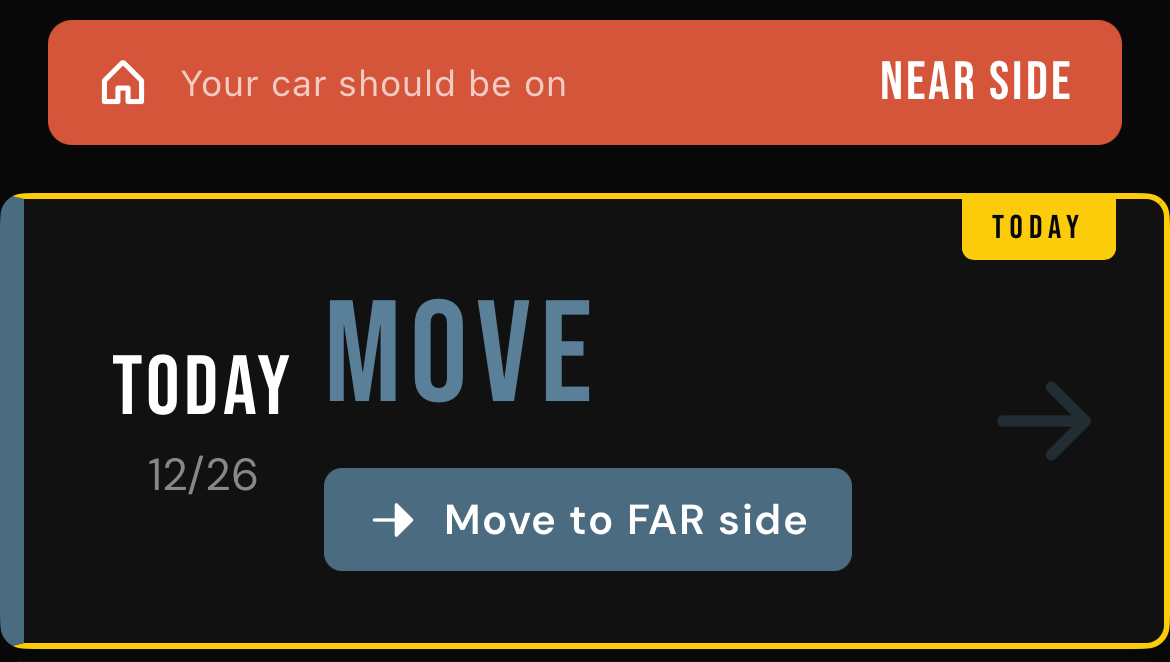
For whatever reason, Apple was very much slow playing the approval of my developer account application. I was eager to get feedback from others so I translated the app from an iOS app to a web app.
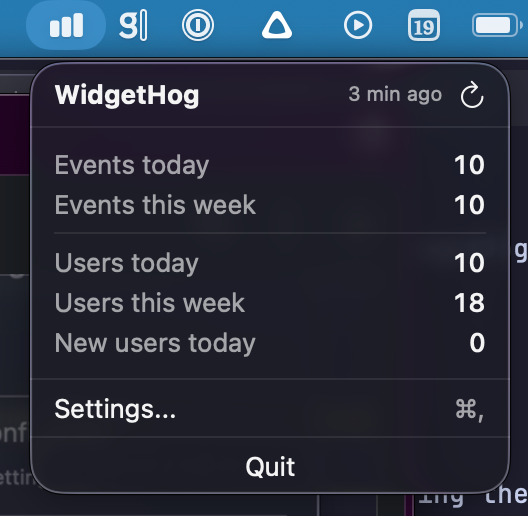
As I prepared to share it, I needed product analytics and set up PostHog. I'm shift-refreshing my analytics dashboard and it occurs to me it'd be wonderful to have this data as a widget on my Mac desktop. A couple hours later I had a running menu bar application showing stats in the menu with widgets on my desktop. And sure, I didn't NEED to go through this waterfall of projects, but Apple was stonewalling me and idle hands, right? I regret nothing.
I still maintain that I am not a software engineer but I think that distinction is less and less real. Not to say that I am, but that that old definition doesn't matter. I just want what I want. I want those numbers more accessible and I am unlearning the notion that I have to be a software engineer, or have built something like this before, or know how to do it before I can make it real. We are like that elephant born in captivity that now can be bound by a little string. It is a captivity of what we believe we can do more than what we are truly capable of.
The kids are going to be alright because they don't have this to unlearn. I still believe that an experienced hand at the wheel guiding AI tools will really be able to accomplish amazing things. In the short term the experienced hands will have their capabilities magnified. In the longer term, while it's not a contrarian take to say the children are our future, I am hopeful that the dark cloud hanging over juniors will dissipate. They'll come into their own with this technology in ways that most of us won't. Not can't. But likely won't. Getting native to these tools means taking the time and getting temporarily worse at things you already know how to do well. Most people aren't willing to or don't have the luxury to regress temporarily in search of higher highs.
In the Matrix, the kid doesn't tell Neo how to bend the spoon. He tells him to realize there is no spoon. The constraints were never real. The kids entering the workforce today won't have to unlearn that the spoon exists. You don't have to be an engineer to automate your work. You don't have to be a data analyst to interrogate how your application works. You don't have to be a recruiter to put together a thoughtful framework for hiring. Is it better if you are? Certainly. But everyone can get started and get decent outcomes with a clear understanding of what you want to accomplish. The rest of us have the choice on whether we keep trying to bend the spoon or finally see what they see.