One Document, Every Touchpoint
I distilled how I talk about my work into a single positioning doc, then used Claude Code to propagate it across my website, LinkedIn, and scheduling page in an afternoon. The friction of keeping your positioning in sync is gone, and that changes how often you're willing to do it.
I've been refining how I talk about what I do. Conversations with potential clients, with friends, with my coach. Iterating on the language until it clicks. That's the hard part, and it's ongoing. What's delightful though is how easy the next part has become.
All of those conversations produce transcripts and notes. Emails and Slack exchanges. I distill them into a single document that captures who I'm trying to reach, what I'm offering, and how I work. Think of it as a positioning spec. And once the first version of that unified document existed, it became the input for everything else.
Propagating the positioning
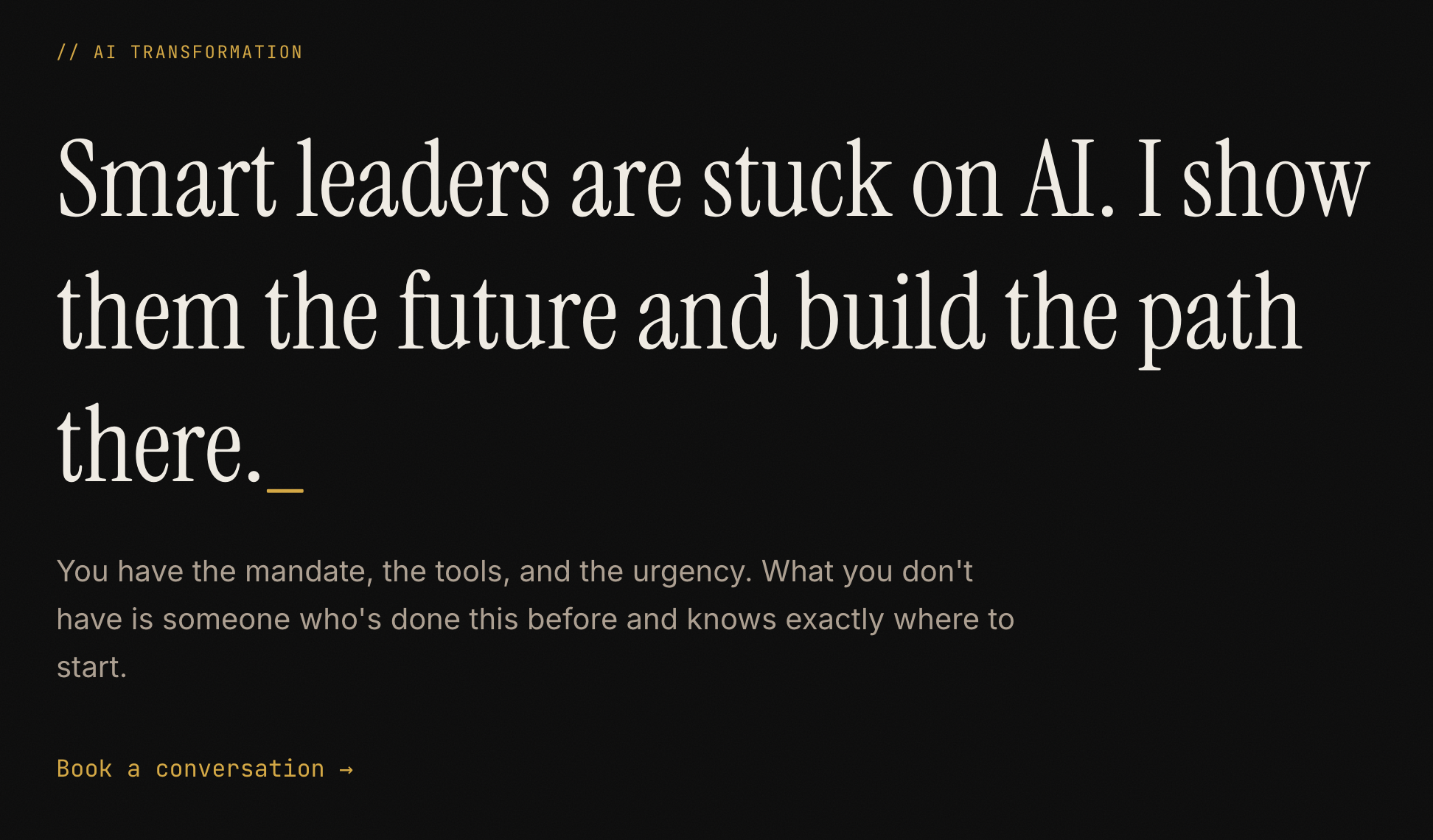
First up was my website, saadiq.xyz. (I moved the newsletter to /newsletter so now my marketing site is front and center.) I fed the positioning doc into Claude Code and we built the site together. The copy, the structure, even the design direction. I'm offering a technical thing to technical people, but it's not technical for its own sake. I liked the idea of a terminal-inspired aesthetic, and the positioning doc gave Claude Code enough context to run with that.
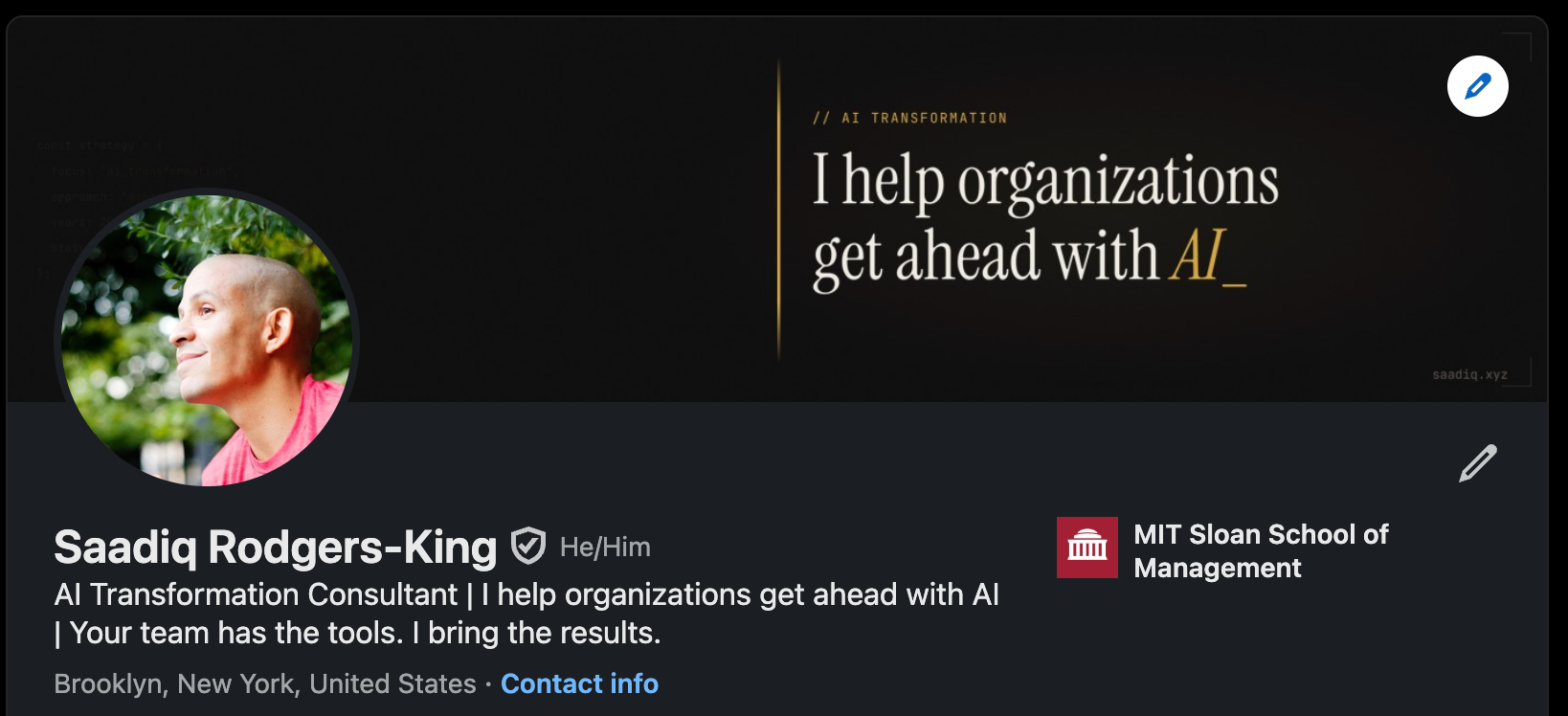
Then I looked at my LinkedIn profile and realized it was telling an older story. LinkedIn goes through considerable trouble to make sure you have a difficult time bringing information in and out, so I took a screenshot of the entire page. I dropped that into Claude Code alongside the website and the positioning doc. "Here's my reference offering doc. Here's what I'm saying on my site. Here's what LinkedIn says. What should change?" It gave me specific guidance, I made the tweaks, and now those two touchpoints are telling the same story.
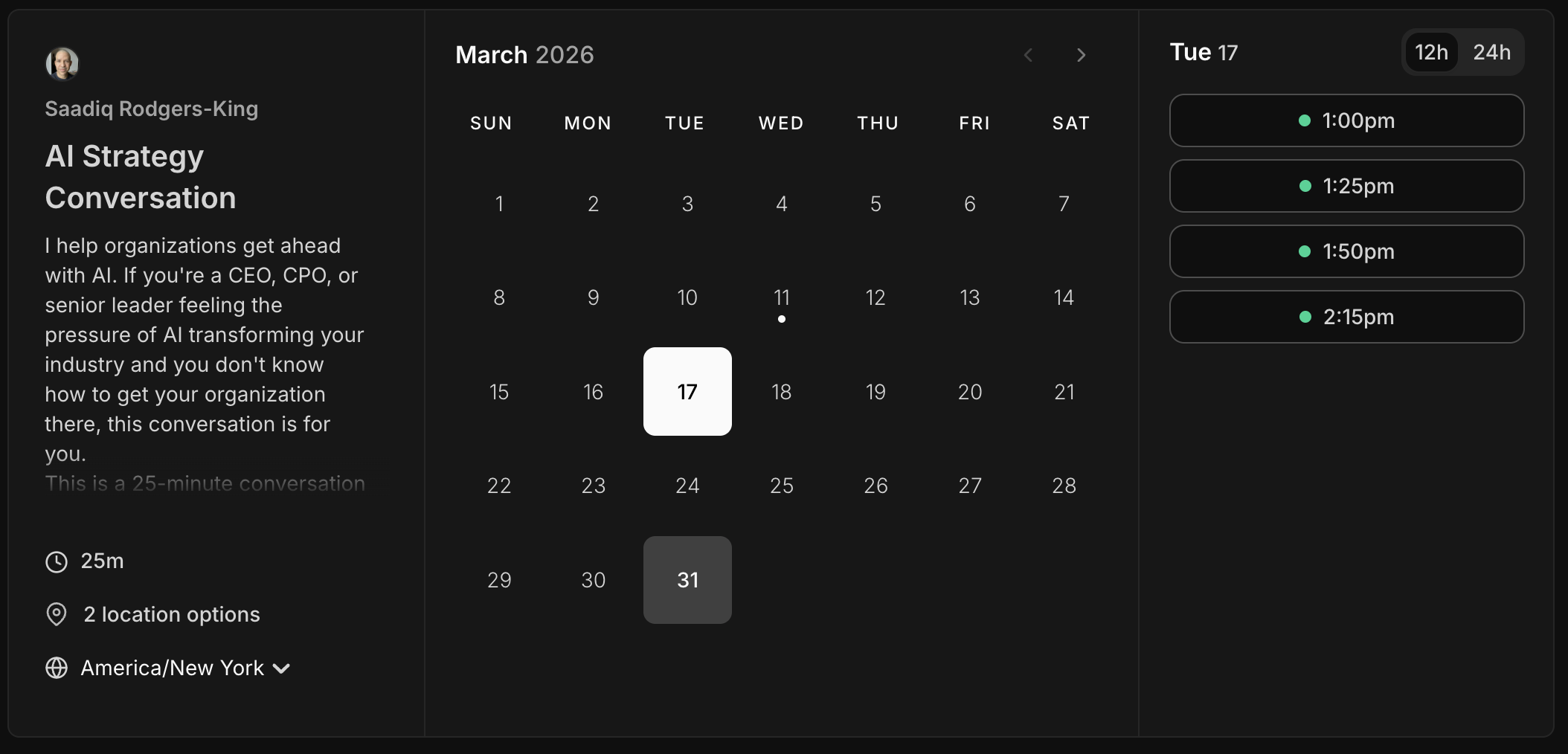
Then I followed a link from my own homepage to my Cal.com scheduling page and realized I hadn't updated that in months. The slug was "free-ai-conversation." The description had nothing to do with my current offering. I discovered Cal.com has an API, made it available to Claude Code, and it read the whole structure. It rewrote the slugs, the descriptions, all of it, consistent with everything else. It even generated a custom booking confirmation page. Sadly, Cal.com gates that behind a team plan. I decided I was already doing too much and moved on.
In my investigation, I did find that Cal.com is open source and I could self-host the whole thing. This would allow me to get my custom booking page without upgrading my package. I resisted. See? Growth.
The speed of this is the point
Traditionally, updating all of these touchpoints is such an undertaking that you just don't do it. You pick a positioning, you grind through updating everything over a couple of weeks, and then you don't touch it again for a year. The friction is so high that your brand slowly drifts out of sync with how you actually talk about your work.
That friction is gone now. If I had the volume of conversations and velocity of insight to justify it, I could update every touchpoint daily. You can absolutely see the possibility of individually tailored positioning per audience. I don't think I want that. But the fact that I could is the thing worth sitting with.
Beyond the solo practitioner
This isn't just a trick for consultants tuning their personal brand. Every company has experienced the bottleneck of a select few people who unintentionally gatekeep the ability to write on-brand copy or produce on-brand visuals. The marketing team, the one designer who "gets it," the founder who insists on approving every word.
All of those things can sit in files now. A brand voice document. A visual identity spec. Messaging guidelines. Files that anyone on the team can hand to an AI tool and say "make this consistent with who we are." Not just the specialists. The brand becomes infrastructure instead of tribal knowledge.
The hard part is still deciding what you want to say. Just because you can update everything after you come out of a single exciting conversation doesn't mean you should. But once you've done that work, propagating it everywhere is no longer the bottleneck. And that changes how effectively you can connect with your intended audience.